Portugal is considered Europe’s oldest nation-state. This claim is based on its borders, which have remained virtually unchanged for over 750 years, and by its continuous sovereignty. The victory of the Portuguese forces over the Kingdom of Leon at the Battle of São Mamede in 1128 is considered a watershed event that permitted the embryonic foundation of an independent Portugal. After soundly defeating five Moorish kings at the Battle of Ourique in 1139 during the Reconquista, Afonso Henriques declared himself King of Portugal. The outcome of this battle had important consequences. After additional conflict and conferences, Pope Alexander III issued the papal bull Manifestis Probatum in 1179, which definitively recognized Portugal as a sovereign kingdom and Afonso Henriques as its king. Moreover, the Portuguese Army, which originated in the twelfth century, is considered one of the oldest armies in the world.
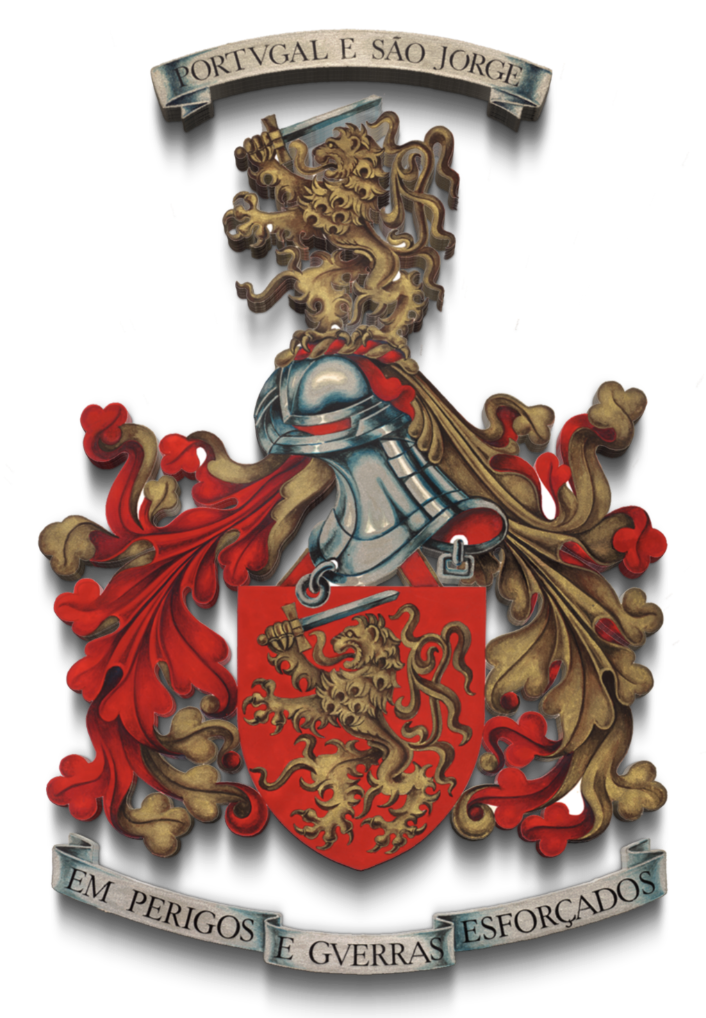
Portuguese Army Coat of Arms.
Through the turbulent centuries of unprecedented Portuguese overseas explorations and expansion that began in the fifteenth century; the Reconquista over the Moors that ended in 1492; the Restoration War; conflicts (mainly with Spain) of the Ancien Regime; the Napoleonic Wars; military revolts, revolutions, and coups; the “Carnation Revolution” of 1974; and the wars of Arican decolonization, the Portuguese Army has distinguished itself. It routinely standardized and improved its systems of military training and mobilization. The Portuguese Army also learned from Spanish military innovations including the “spike and shot” formation and the early “combined arms” tercio. The latter was a flexible yet cohesive triangular formation, consisting of pikemen, swordsmen, and crossbowmen, later replaced by the compact firepower of the arquebus. This tactical innovation enhanced the span of control, mobility, lethality, and firepower on the evolving battlefield. By the early eighteenth century, the Portuguese tercios had transformed into regiments.
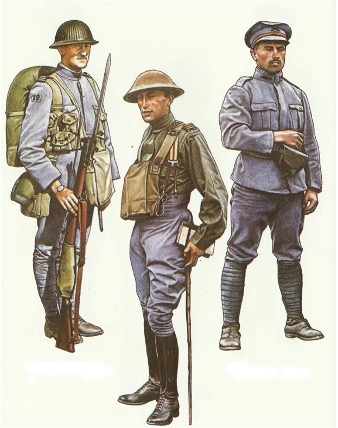
Portuguese Army on the Western Front 1917-1918 (from left to right): Infantry NCO, Staff officer, Artilleryman.
The Portuguese Army’s organizational structure and weaponry over the last two centuries have reflected advances in leadership, industrialization, and technology, which in turn influenced the battlefield application of advanced tactics. Today, the modern Portuguese Army, numbering about 14,000 military personnel, serves primarily to defend the nation of Portugal. It also routinely provides experienced units to serve in foreign missions, mainly those of the United Nations, NATO, and the European Union. It also participates in numerous technical-military cooperation programs, largely with the Community of Portuguese Language Countries, to train and support their national armed forces.
The contemporary Portuguese Army, as shown by its numerous significant threads of demonstrated military professionalism, prowess, and strategic and tactical victory and effectiveness, interwoven with Portuguese history, culture, innovation, and selfless leadership, forms a bright and relevant tapestry that serves as a source of pride, respect, education, and inspiration to the Portuguese military and society today.
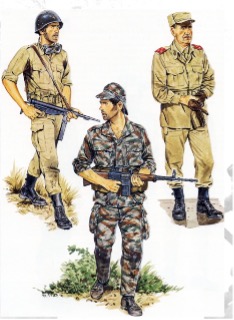
Portuguese soldiers of the Colonial Wars from the early 1960s.
Accordingly, the Portuguese Commission of Military History (Comissão Portuguesa de História Militar, or CPHM), a component national military history commission of the International Commission of Military History, was established in 1989. The Portuguese Commission of Military History is directly subordinate to the Portuguese Minister of National Defense, and has the specific mission, as promulgated in Decree-Law no. 59/98 of 17 March 1989, ”to promote and coordinate the research and dissemination of the Military History of Portugal, within the scope of National Defense, as well as the representation of Portugal and the dissemination of the National Historical-Military heritage within similar international structures.. The CPHM also has an important and specified mission domestically: to bring “together the collaboration of military and civil institutions, notably academies, universities, research centers, archives, libraries and museums and, individually, historians and researchers specialized in Military History or related to it, within the general concept of historical science.”
Five years ago, the fledgling Portuguese Military History Magazine (Revista Portuguesa de História Militar, or RHPM) was created by His Excellency the Portuguese Minister of National Defense in an official order dated 28 June 2021.
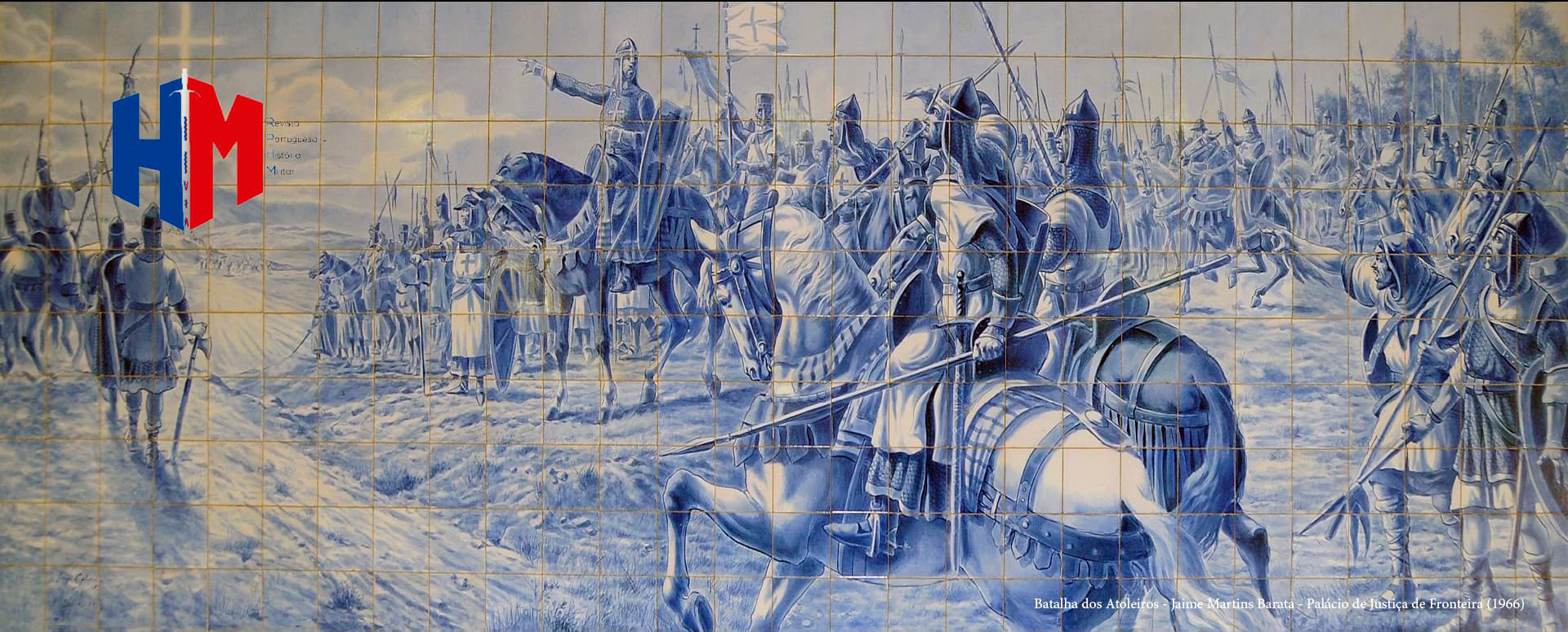
The purpose of the RHPM, according to Major General Dr. João Vieira Borges, CPHM President, is to publish “articles of a scientific, heuristic or historiographical nature on matters related to military history, the RPHM aims to deepen and boost knowledge of military history, with priority given to the military history of Portugal.” The Portuguesa de História Militar, edited expertly by Dr. Abílio Pires Lousada and Dr. Humberto Nuno de Oliveira, is an open access journal, published twice a year online (https://www.defesa.gov.pt/pt/defesa/organizacao/comissoes/cphm/rphm/Paginas/default.aspx) and in hard copy. The former permits the Portuguese-language Portuguese Military Editors Dr. Abílio Pires Lousada and Dr. Humberto Nuno de Oliveira.
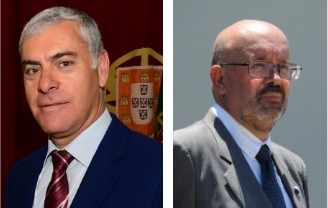
History Magazine “to be consulted and read by the largest number of readers, from the general public to specialists, teachers, researchers and students, and in this sense it will be made available free of charge through an easily accessible online page.” Hard-copy paper journals are extremely well edited and handsomely produced, frequently containing more than a dozen superbly researched and compellingly written military history articles and first-hand military accounts of contemporary relevance. The articles are superbly supplemented, with photographs, maps, charts, and vintage images, which provide a most welcome illustrative and visual element to the text.
A key organizational principle of RHPM is that “each issue is subordinated to a theme, regardless of whether extra dossier articles always have their space, providing greater participation from all historians, military and civilian.” The theme of the first issue of the RHPM was “Start of the African War, 1961-1965.” These bitter conflicts, fought by Portugal against independence movements in Angola, Guinea-Bissau, and Mozambique, ultimately lead to the independence of five African nations and fundamentally reshaped the political landscape of southern Africa. Moreover, these conflicts were part of a larger, major ideological battlefield, pitting an increasingly dogmatic and isolated Portugal against colonies being supported by the Soviet Union and Cuba, in a paradigm of an African proxy Cold War. The African Wars increasingly consumed up to 40 per cent of the annual Portuguese national budget, an unsustainable amount, and the maws of combat, by 1974, devoured some 8,831 Portuguese soldiers killed in action and another 15,507 wounded. These seemingly interminable African campaigns ended only in 1974, when exhausted and disenchanted Portuguese officers sparked the Carnation Revolution in April 1974. The African Wars had, and continue to have, a profound and enduring impact on the Portuguese Army and society.
The themes of the nine issues of the Revista Portuguesa de História Militar are:
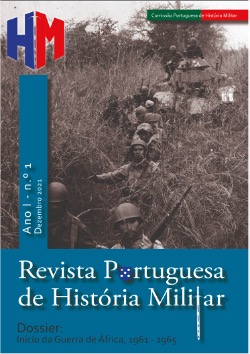
1, no. 1 (December 2021): Inicio da Guerra de Africa, 1961-1965 [Start of the African War, 1961-1965]
2, no. 2 (June 2022): Dossier: Da Fundação à Expansão, Séculos XII-XVI [Dossier: From Foundation to Expansion, 12th-16th Centuries]
3, no. 3 (December 2022): O Brasil na História Militar de Portugal, 1500-1822 [Brazil in the Military History of Portugal, 1500-1822]
4, no. 4 (June 2023): Portugal no Contexto da Segunda Guerra Mundial, 1939-1945 [Portugal in the Context of the Second World War, 1939-1945]
5, no. 5 (December 2023): Génese do Império Português do Oriente [Genesis of the Portuguese Empire of the East]
6, no. 6 (June 2024): 25 de Abril de 1974. Operações Militares [April 25, 1974. Military Operations]
7, no. 7 (December 2024): O reinado de D. Sebastião, a “perda de independência" e o período Filipino [The reign of D. Sebastião, the “loss of independence" and the Philippine period]
8, no. 8 (June 2025): Restauração Portuguesa (1640-1668) [Portuguese Restoration (1640-1668)]
9, no. 9 (December 2025): Da Retirada Militar do Ultramar ao 25 de Novembro de 1975 [From the Military Withdrawal from Overseas to November 25, 1975]
This issue of the Revista Portuguesa de História Militar is the tenth issue of this prestigious journal published since it was established five years ago. This is a definite watershed in the evolution of military literature and is duly recognized as being remarkable. Each of the ten issues of the Revista Portuguesa de História Militar has accomplished the Journal’s mission of educating and inspiring its worldwide and Portuguese military and civilian reading audience, placing military history issues within an appropriate strategic, cultural, and societal context. Even more importantly, the Revista Portuguesa de História Militar has been instrumental in preserving and perpetuating the magnificent military history and heritage of the highly respected and influential Portuguese Armed Forces.
Please accept the sincere and heartfelt congratulations, of the International Commission of Military History and of myself, to the esteemed Portuguese Commission of Military History, its President (Major General Dr. João Vieira Borges), and its dedicated professional editors (Dr. Abílio Pires Lousada and Dr. Humberto Nuno de Oliveira) on the publication of the tenth issue of the celebrated Revista Portuguesa de História Militar.
Queira aceitar as sinceras e sentidas felicitações, da Comissão Internacional de História Militar e minhas, à estimada Comissão Portuguesa de História Militar, ao seu Presidente (Major-General Dr. João Vieira Borges), e aos seus dedicados editores profissionais (Dr. Abílio Pires Lousada e Dr. Humberto Nuno de Oliveira) pela publicação do décimo número da célebre Revista Portuguesa de História Militar!